When shopping for an engagement ring, a necklace, or any other fine jewelry, one of the first things you should consider is price. Yes, beauty and quality are very important, but does the piece match your budget?
Moissanite and lab-grown diamonds have become very popular alternatives to real diamonds. Both offer strong durability, impressive sparkle, and perfect resemblance to diamond, but their prices differ.
This guide compares moissanite vs. lab grown diamond price in detail and highlights the factors behind their differences.
What is Moissanite? Is Moissanite Lab Grown?
Moissanite is a gorgeous, clean gemstone that looks incredibly similar to a diamond but isn’t real diamond. While diamond is made of crystallized carbon, moissanite is made of silicon carbide. It was first discovered over 100 years ago in a meteor crater by a French scientist. So, it’s a true earth gem.
Because natural moissanite is exceptionally rare, scientists have over the years mimicked nature’s intense heat and pressure to grow these stones in the lab. So, is moissanite lab grown? YES. Almost all of the moissanite you see in jewelry stores today are safely created in the lab.
What is Lab Grown Diamond vs. Natural Diamond?
As mentioned earlier, moissanite is created in the lab. But is it the same as lab-grown diamond? NO.
So, what is a lab-grown diamond?
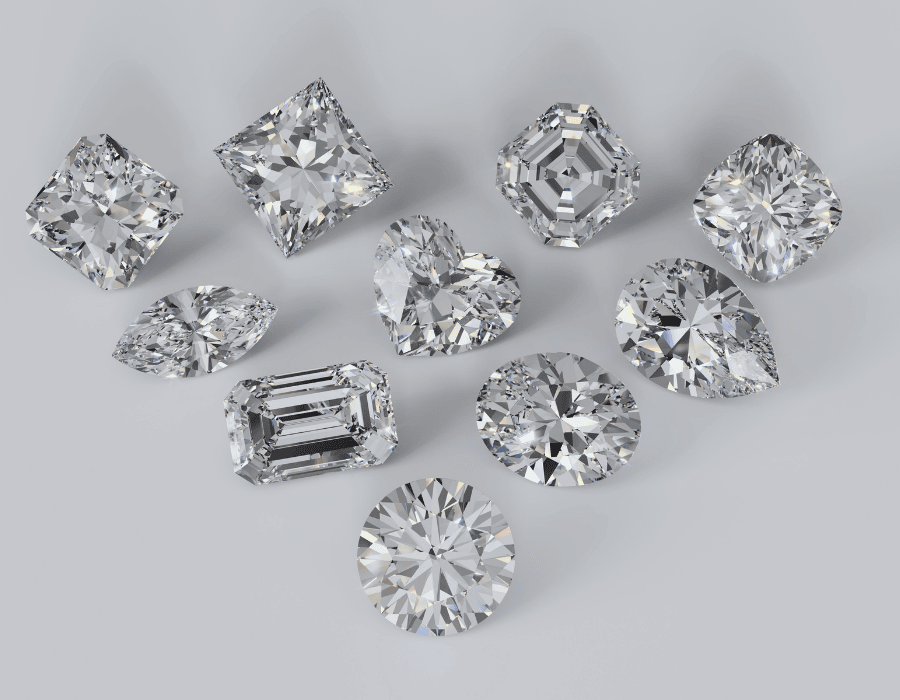
Lab-grown diamonds are basically diamonds created in a lab. They share the same chemical, physical, and optical properties as natural diamonds. The only difference is that real diamonds grow over billions of years deep inside the earth, while the other takes just a few weeks under advanced technological conditions and strict quality control.
They are so identical that even expert gemologists need specialized machines to tell them apart. A lab-grown diamond gives you the same luxurious look, durability, and even better sustainability but at a fraction of the cost.
Moissanite vs. Lab Grown Diamond, What’s the Difference?
Lab grown diamond consists of pure carbon, matching natural diamonds identically. Moissanite on the other hand, is made of silicon carbide, a completely different mineral. On the Mohs hardness scale, lab grown diamond scores 10, while moissanite scores 9.25.
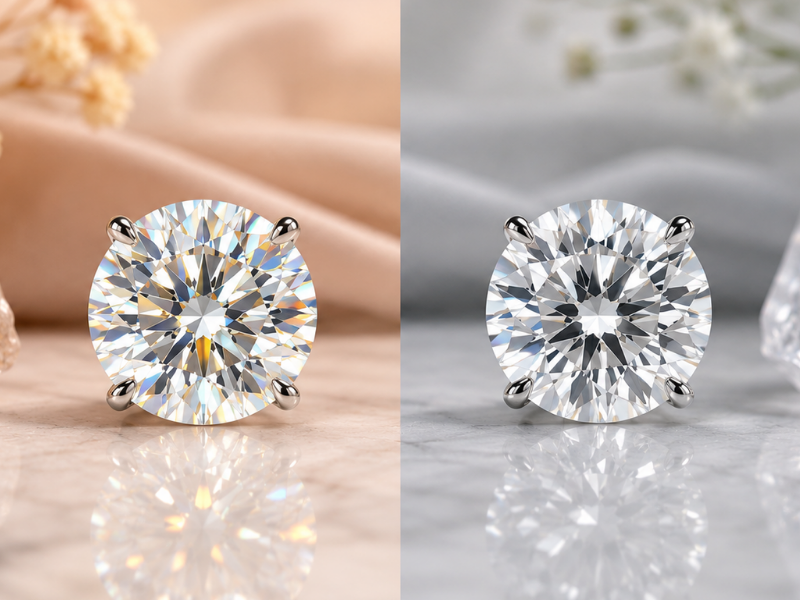
When it comes to sparkle, moissanite outshines diamonds with a higher refractive index (2.62 vs. 2.42) and doubles the fire, creating a colored rainbow effect. Meanwhile, lab grown diamond follows the traditional 4Cs grading standards, whereas moissanite is produced according to the specific grading of the brand or manufacturer.
Here is a detailed summary of the difference between moissanite and lab diamond.
| Type | Moissanite | Lab Grown Diamond |
| Composition | Silicon Carbide | Pure Carbon |
| Hardness (Mohs) | 9.25 (Extremely Durable) | 10 (Hardest material) |
| Brilliance (Refractive Index) | 2.65 – 2.69 (Higher than Diamond) | 2.42 (Classic white light) |
| Fire (Light Dispersion) | 0.104 (Rainbow-like flashes) | 0.044 (Sophisticated brilliance) |
| Grading Standards | Manufacturer / Brand Specific | Professional GIA / IGI Certification |
| Best For | Maximum sparkle and budget flexibility | Authentic diamond appearance and prestige |
Moissanite vs. Lab Grown Diamond Price Chart (By Carat Size)
Just as they differ in chemical and physical characteristics, moissanite and lab-grown diamonds also differ in pricing, especially across various carat sizes. The table below provides factory prices for moissanite and lab-grown diamonds of various sizes.
| Type | Moissanite | Lab-Grown Diamond | Moissanite | Lab-Grown Diamond |
| Shape | Round | Round | Other | Other |
| Grade | D-F/VVS | D-E(VS-VVS) | D-F/VVS | D-E(VS-VVS) |
| 0.5ct | $14-$25 | $200-$265 | $16-$27 | $225-$325 |
| 1.0ct | $18-$30 | $235-$315 | $20-$35 | $275-$400 |
| 1.5ct | $22-$35 | $275-$365 | $25-$40 | $325-$450 |
| 2.0ct | $25-$38 | $335-$435 | $35-$45 | $450-$575 |
| 2.5ct | $30-$42 | $400-$500 | $40-$50 | $575-$725 |
| 3.0ct | $35-$50 | $450-$650 | $48-$60 | $725-$950 |
Here are major highlights from this moissanite vs lab grown diamond price comparison table.
1. The Price Gap Increases with Carat Size
The difference between moissanite and lab grown diamond pricing becomes much larger as carat size increases. Looking at the table above, you will see that the difference between lab grown diamond vs moissanite price 1 carat is incredibly high, and this continues as the carat increases.
2. Lab-Grown Diamonds Cost Significantly More Than Moissanite
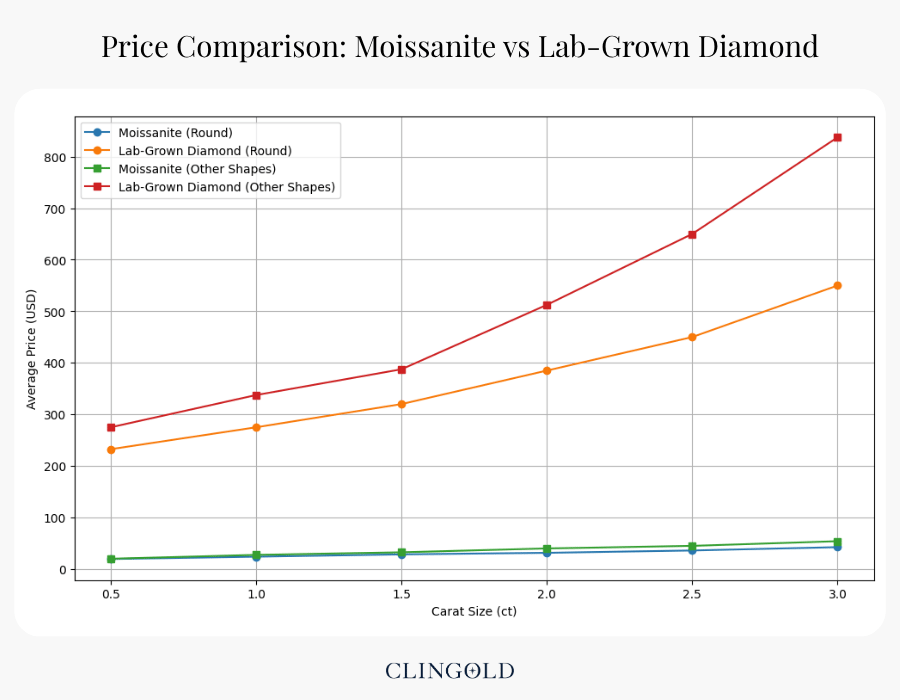
Across every carat grade, lab grown diamonds are priced substantially higher than moissanite. This is mainly because lab diamonds share the same composition, hardness, and grading standard as natural diamonds.
3. Shape Has a Bigger Impact on Lab-Grown Diamond Pricing
The shape affects pricing for both gemstones, but the impact is usually greater with lab grown diamonds. Just like real diamonds, fancy cuts such as oval, emerald, or cushion drastically increase lab diamond prices. Moissanite prices, on the other hand, remain incredibly steady regardless of the shape you choose.
4. Moissanite Has a Much Flatter Pricing Curve
Moissanite prices do not increase drastically as carat size grows. Instead, they increase gradually and steadily, creating a flatter pricing curve overall. This means you can choose larger stones without facing dramatic price jumps. Lab grown diamonds, on the other hand, become progressively more expensive at higher carat weights.
What Affects Moissanite vs. Lab Grown Diamond Price?
When deciding moissanite vs. lab grown diamond price, several factors come into play. They include:
The “Exponential Carat” Rule
Lab grown diamond prices jump sharply at major milestone weights like 1-carat and 2-carats. This is due to intense consumer demand and the technical difficulty of growing a single, continuous crystal structure large enough to cut into these carats.
This exponential carat rule doesn’t really affect how much does moissanite cost. Laboratories grow silicon carbide in large, consistent batches with ease, meaning bigger moissanite stones are not difficult to come by.
The Role of Cut, Color, and Clarity in Pricing
Cut, color, and clarity, have a major impact on the final price of both moissanite and lab grown diamonds. Stones with excellent cuts produce stronger brilliance and command higher prices. The ones with higher color and clarity grades are also considered more desirable and rarer.
However, premium gradings significantly increase the cost of lab grown diamonds more than it does moissanite.
Grading Fees and GIA/IGI Certifications
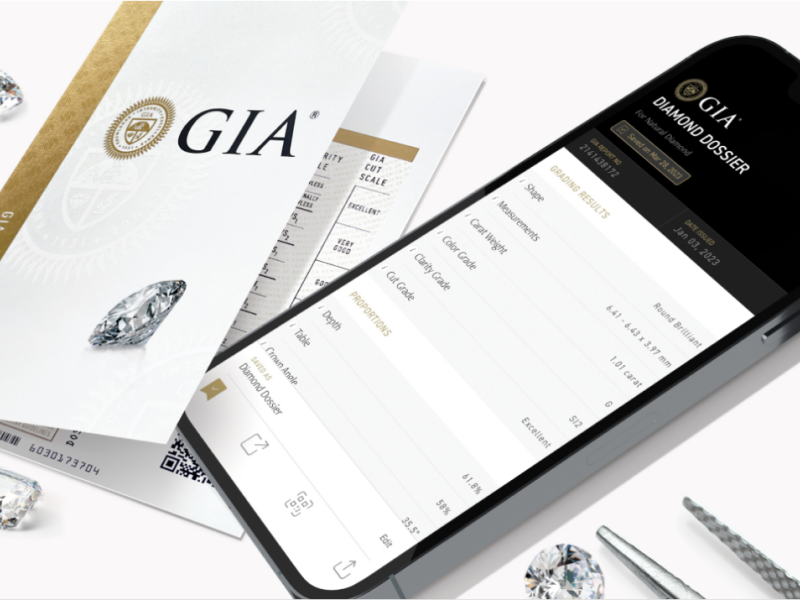
Lab-grown diamonds require independent evaluation by prestigious organizations like the International Gemological Institute (IGI) or Gemological Institute of America (GIA). These meticulous grading processes cost about $100-$200, which adds to the final retail price of the diamond.
Moissanite bypasses these professional grading systems. It utilizes simpler, batch-based quality control, which keeps production and retail prices significantly lower.
Market Demand and Resale Value
Consumer demand and resale expectations also influence pricing of these gemstones. Lab-grown diamonds, for example, are positioned closer to natural diamonds. This increases its price and value in the jewelry market. Moissanite, on the other hand, is positioned primarily as an affordable diamond alternative with little or no resale value.
Is Moissanite Cheaper Than Diamond?
YES, moissanite is significantly cheaper than diamond. Moissanite price 1 carat costs around $18-$35, while a 1-carat diamond can range from $235-$400 depending on cut, color, and clarity. Maintenance cost also varies widely apart.
Why Is Moissanite Cheaper Than Diamond?
The major reasons behind moissanite vs diamond price difference are explained below.
Difference in Material and Rarity
Moissanite is created from silicon carbide, a synthetic mineral. Diamond, on the other hand, is a rare, naturally occurring gemstone composed of pure carbon. Because of this, diamonds are traditionally viewed as more valuable in the jewelry market. Moissanite, although visually similar, is perceived as a more affordable alternative.
Manufacturing Costs and Scalability
While advances in technology over the years have reduced the cost of producing diamonds, growing pure carbon still requires massive energy and specialized plasma reactors. Conversely, many laboratories have the ability to mass produce silicon carbide in large batches and very low failure rates. This seamless scalability makes moissanite cheaper to manufacture and keeps retail prices incredibly low for consumers.
Does Moissanite Have a 4Cs Standard as Diamond?
The 4Cs were developed by the GIA specifically for diamonds. Since moissanite is a different gemstone (being that it doesn’t have the same physical and chemical properties as diamond), it isn’t graded under the same universal system.
Moissanite however borrows the concept of the 4Cs for marketing clarity. But it does not have a strict, globally recognized grading system like diamond. Instead, the pricing and quality depend more on brand, cut precision, and overall appearance.
How to Choose Moissanite vs. Lab Grown Diamond?
For Consumers
Choose moissanite if you crave a bold, minimalist sparkle and want the budget freedom to buy a large stone without debt. You can opt for a lab grown diamond if what you want is the prestigious “diamond” look and the durability advantage of a perfect 10 on the Mohs hardness scale.
For Jewelry Business & Brand Owners
Moissanite offers exceptional profit margins, lower production costs, and greater flexibility for trend-driven jewelry lines. Conversely, lab diamonds are better suited for fine jewelry and bridal markets where customers expect certified stones, premium positioning, and higher-ticket purchases.
Can Moissanite Pass the Diamond Test?
NO. Though moissanite can sometimes trigger some diamond testers because of its thermal conductivity. However, professional gemologists can easily distinguish the two using advanced testing methods.
Since both gemstones have different physical & chemical characteristics, with different values, they should always be labeled accurately. It’s important to be transparent and never market moissanite as a real diamond or sell it at diamond prices. Honest labeling builds trust with customers and protects brand credibility.
Conclusion
Analyzing the moissanite vs lab grown diamond price shows that your choice depends entirely on your personal priorities. Moissanite provides an unbeatable, budget-friendly alternative with exceptional rainbow fire. Meanwhile, lab grown diamonds offer authentic diamond composition and undisputed durability at a premium, yet affordable cost.
Partner with a reputable gold jewelry manufacturer today to source any of these precious stones and make breathtaking, high-quality pieces.