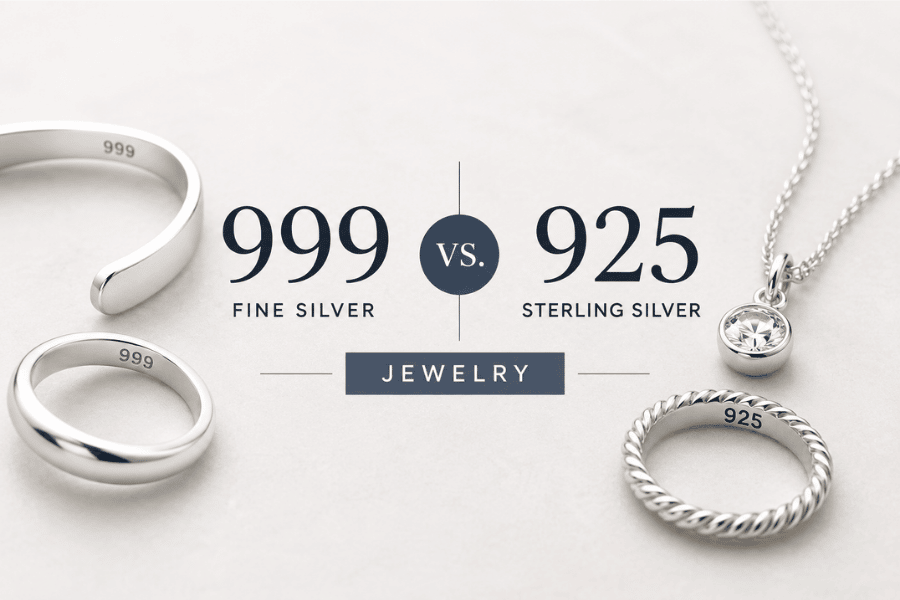
When shopping for silver jewelry, you’ll often have to choose between two options: fine silver vs. sterling silver. Though they look alike on the surface, they are far from the same. Each delivers its own blend of shine, durability, and value.
In this guide, we’ll break down the key differences between 925 vs 999 silver to help you decide which is best for your jewelry collection.
What is 999 Fine Silver?
999 fine silver is a blend of 99.9% pure silver and small amounts of trace elements. Its high purity gives it a bright white mirror-like shine, hence why it is called “fine” silver.
Just like other premium metals, fine silver is highly resistant to corrosion and tarnishing, which makes it highly valued in the jewelry market. However, it is soft, prone to scratches, bends, & dents because it contains very little amount of strong alloyed metals.
What is 925 Sterling Silver?
925 sterling silver contains 92.5% pure silver and 7.5% alloyed metals, usually copper or zinc. You might want to ask: is 925 silver good quality? Yes, it is. The added metals do not reduce its quality. Instead, they strengthen it and make it more durable and better suited for jewelry that’s worn regularly.
Sterling silver is more affordable and offers better resistance to bending & scratching. It also retains the bright, premium appearance of pure silver.
Difference Between Fine Silver and Sterling Silver
Now, let’s break down the difference between silver and sterling silver in regards to their purity level, appearance, tarnish resistance, hypoallergenic quality, durability, and market value.
Purity and Metal Content
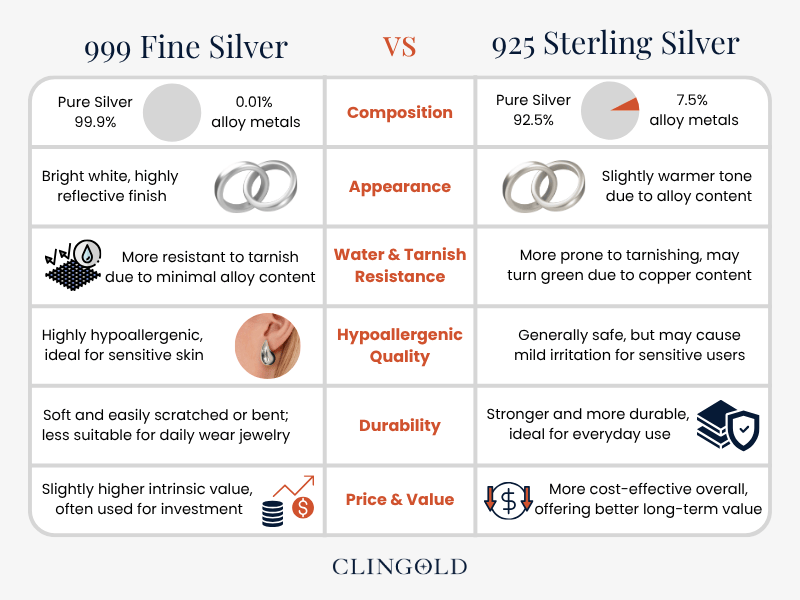
The major 925 silver vs 999 silver difference is their silver content. Fine silver contains 99.9% pure silver and 0.1% trace elements. It is the highest purity of silver commercially available and it has high intrinsic value.
Sterling silver, on the other hand, contains 92.5% pure silver and 7.5% alloy metals (copper, zinc, nickel, etc). It is stronger, more durable, and very practical for everyday jewelry.
Appearance and Shine
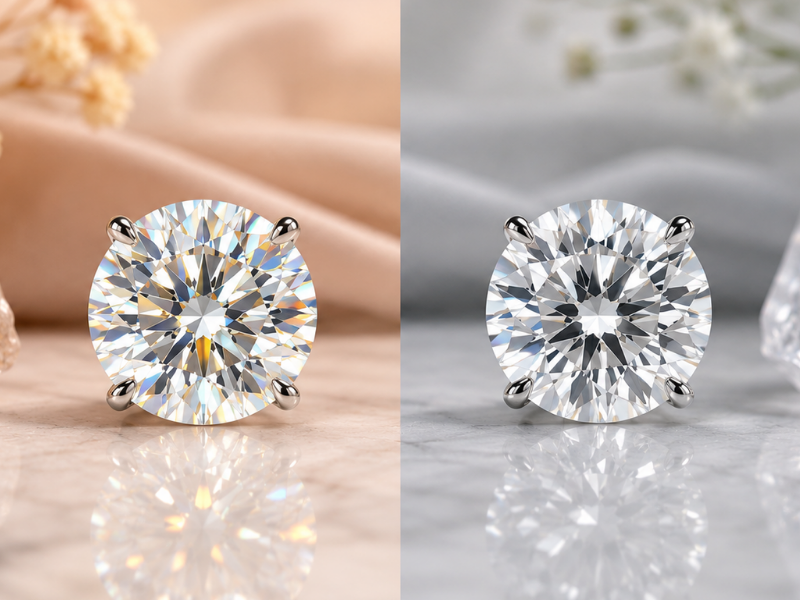
Another difference between 925 vs 999 silver is how they look. Fine silver has a bright, extremely white color and a highly reflective shine thanks to its high silver purity. It gives off a clean and luxurious appeal.
In contrast, sterling silver has a slightly warmer, grey-white tone. Thanks to its strength, it is able to retain its shine much longer than fine silver, even with regular wear.
Water and Tarnish Resistance
Just like gold filled jewelry, 999 silver is highly resistant to water and tarnish, since it doesn’t contain metals that react with air or moisture.
925 silver, on the other hand, is prone to oxidation and tarnish when continuously exposed to moisture, air, sweat, or sulfur-containing substances. This is because of the copper and other alloy metals mixed in it.
Hypoallergenic Quality
Fine silver is generally more hypoallergenic because it contains very little added metals that may irritate sensitive skin. That’s why it is the preferred choice for people who easily react to certain jewelry alloys.
Sterling silver is also widely regarded as skin-friendly, but in rare cases, the added metals may cause mild irritation for highly sensitive skins.
Durability and Maintenance
999 silver is extremely soft and prone to scratches, dents, and bending. As a result, it requires gentler handling and more careful maintenance.
Whereas, 925 silver contains metal alloys that strengthen it and increase its overall durability. The resulting hardness is why it is better suited for daily wear and also easier to maintain. All it requires is regular cleaning and scheduled polishing.
Price and Value
Last but not the least is the price difference between silver and sterling silver.
999 fine silver is more expensive due to its silver purity. It is often used for investment or collectible purposes rather than everyday use. Sterling silver, on the other hand, is fairly affordable and better suited for making fine jewelry that can withstand regular wear. Its balance of strength, cost-effectiveness, and premium appearance makes it very practical for customers and jewelry brands alike.
Is 999 Silver Better Than 925 Silver Jewelry?
Choosing which is better between 925 vs 999 silver depends on how you plan to use it. Fine silver is better for buyers who value high purity, brighter color, and hypoallergenic properties. Whereas, sterling silver is the better choice for daily wear because it is stronger, more durable, and easier to maintain.
Is 925 or 999 Silver Jewelry Waterproof?
999 and 925 silvers can both get wet occasionally, but neither is completely waterproof. Regular exposure to chlorinated water, saltwater, sweat, and harsh chemicals can gradually affect their shine and surface condition over time.
Does 925 or 999 Silver Jewelry Tarnish or Turn Green?
Many buyers ask, does 925 sterling silver tarnish or turn skin green? The answer is Yes. Because it contains copper and other alloy metals that react easily with air, moisture, and sulfur, leading to tarnish or discoloration over time.
You might then wonder; does 999 silver tarnish? Well, fine silver does not tarnish easily due to its higher purity level and lower alloy content.
Custom 925 & 999 Silver Jewelry Tips for Brands
As a jewelry brand looking to create a collection of custom silver jewelry, here are some options you can pick from.
925 Silver with 999 Silver Plating
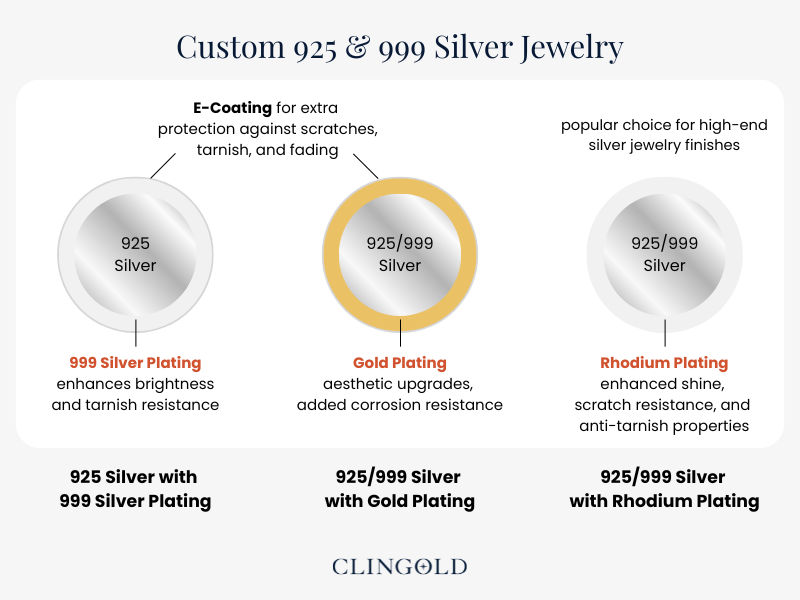
Applying a layer of fine silver over 925 sterling silver improves surface brightness and gives the jewelry a cleaner and more premium appearance. The sterling silver base maintains the structural strength needed for daily wear, while the fine silver plating helps improve tarnish resistance. With this combination, you can achieve the luxurious look of pure silver without compromising durability or cost efficiency.
At Clingold, we also add an e-coating layer similar to that of gold vermeil jewelry. This provides extra protection against scratches, tarnish, and fading.
925/999 Silver with Gold Plating
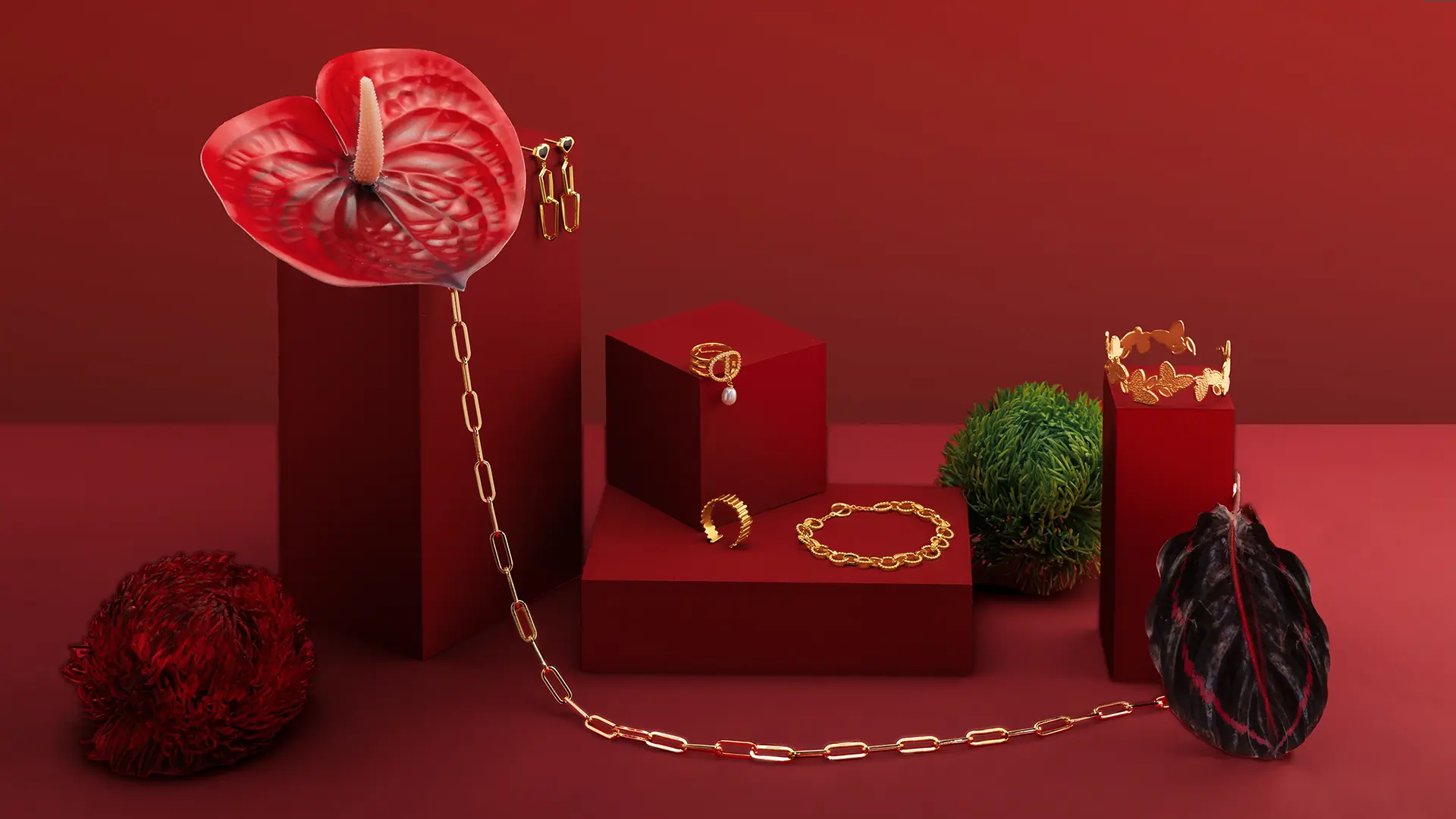
You can also enhance silver jewelry by adding a layer of pure gold to the surface. Common options include gold plated jewelry (with 0.03-0.06 microns of gold), gold vermeil jewelry (with 2.5+ microns of gold), and gold-filled jewelry (containing at least 5% gold content).
By combining traditional goldsmithing with automated precision, Clingold ensures that these “gold-enhanced” silver pieces retain their luster and durability for years.
925/999 Silver with Rhodium Plating
Another option is to coat the silver jewelry with a thin layer of rhodium—a widely used technique for high-end silver collections. Rhodium plating enhances the jewelry’s shine and improves its scratch resistance & anti-tarnish properties. It also creates a cleaner white finish, helping the jewelry maintain its polished appearance much longer.
These finishes, when done by a professional gold jewelry manufacturer, improves visual appeal, adds corrosion resistance, and help you position your collections as affordable luxury products.
Conclusion
To wrap up, the difference between fine silver vs sterling silver spans across their purity level, appearance, water & tarnish resistance, durability & maintenance need, hypoallergenic quality, and market value. Choosing the better choice for you depends on your priorities and lifestyle. You can make a pick based on your preference for the pure and luxurious feel of fine silver or the durability and practicality of sterling silver.