Rose and yellow gold both have their own unique charm and appeal, making them popular across fashion styles and generations. Yet one question lingers in the mind of anyone about to purchase a gold piece: is rose gold more expensive than yellow gold? This article answers that question and explains why rose gold may be priced differently from yellow gold.
Yellow Gold vs. Rose Gold Composition
Before we look at the possible price differences, let’s first understand what they are made of.
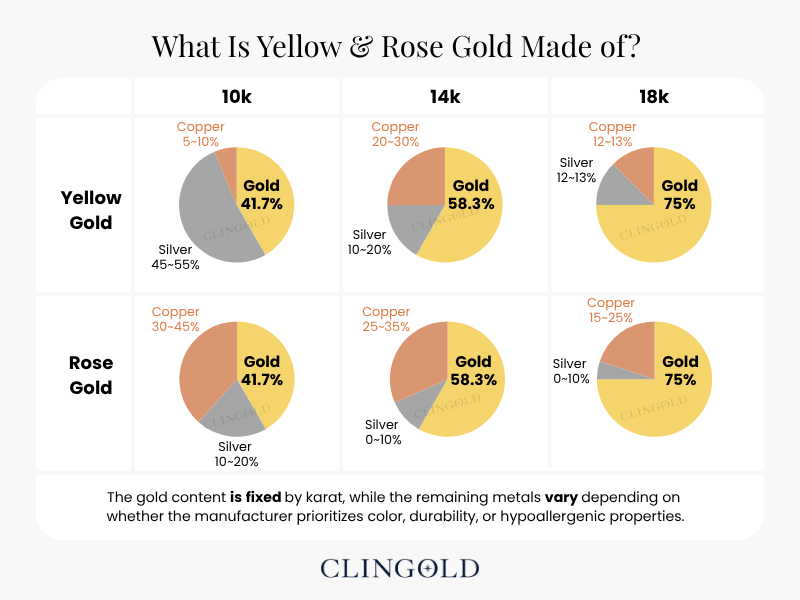
What is Yellow Gold Made of?
Yellow gold is made by blending pure (24K) gold with other metals like copper and silver. This mixture makes the resulting jewelry piece stronger and more practical for everyday use, while still retaining the rich, warm, yellow color of pure gold. However, the intensity of the yellow tone depends on the proportion of gold to alloy metals.
What is Rose Gold Made of?
Rose gold, on the other hand, is made by mixing pure gold with copper, and in some cases a small amount of silver. The higher copper content is what gives it the soft pinkish tone that sets it apart from other gold types, while silver is sometimes used to lighten the color. This composition also makes the gold stronger, more durable, and well-suited for making jewelry that can be worn daily.
Is Rose Gold More Expensive Than Yellow Gold?
At the same karat, all gold colors contain the same amount of pure gold, meaning they have the same intrinsic value and worth. As a result, yellow gold and rose gold jewelry are priced similarly, especially when they have identical designs.
But why do you sometimes see a price difference at the counter? This is often because of the alloy composition of these pieces. Rose gold is alloyed with majorly copper while yellow gold uses a mix of silver and copper. Since copper (which is cheaper) is the main component of rose gold, it is generally less expensive.
But that alone doesn’t determine the final rose or yellow gold price. Design flexibilities and specific manufacturing processes also influence the difference in price.
| Factor | Rose Gold | Yellow Gold |
| Base Gold Price | Same at equal karat; depends on gold market rate | |
| Alloy Metals | Higher copper content (generally lower cost metals) | Mix of silver and copper (slightly higher alloy cost) |
| Additional Coating | No coating required; natural color | |
| Maintenance Cost | Lower; more resistant to wear and fading | Moderate; may require occasional polishing |
| Overall Price | Generally similar; sometimes slightly lower due to cheaper alloys | Generally similar; may be slightly higher depending on alloy mix |
Does Gold Color Affect Value or Just Appearance?
The color of a gold piece only affects its aesthetics and how well it suits various fashion styles. But its value is tied to the amount of pure gold it contains. This is to say, higher karat golds (18K or 22K) have more intrinsic value than lower karats (14K & 10K).
Then, why is rose gold more expensive than yellow gold or vice versa? It comes down to the alloy composition and other production complexities.
When Are Rose Gold and Yellow Gold Priced Different?
These are the factors responsible for yellow gold, rose gold, white gold difference in price:
Difference in Alloy Metal Costs and Composition
Sometimes, the price difference comes from the metals mixed with pure gold. These added metals don’t all cost the same. For example, rose gold contains more copper, while yellow gold uses copper and silver. Silver is a precious metal and way more expensive than copper, thereby increasing the price of yellow gold.
Brand Positioning and Luxury Markup Influence
Branding also plays a big role in how much you pay, especially if you want a specially crafted piece, let’s say a custom 18k gold jewelry. That’s because luxury designers charge more for these pieces. Not because of the metal but because of the name it carries and the exclusivity that comes with such pieces. In a case like this, you’ll find branded rose gold priced higher than non-branded yellow gold.
Surface Treatment and Finishing Techniques
The effort that goes into finishing a piece of jewelry influences how much it will be sold for. Extra steps like polishing, detailed texturing, or special coatings, require more time, skill, and labor so they bump production costs a bit. This is why a custom 10K gold jewelry may cost more than an ordinary 10K piece.
Retail vs. Wholesale Pricing Differences
Where you buy your jewelry affects how much you’ll pay. Retail stores, for example, often spread the charges for marketing, showroom overhead, sales staff payments, etc. on their products. But buying directly from wholesalers or a reputable gold jewelry manufacturer spares you these charges and may even offer direct discounts.
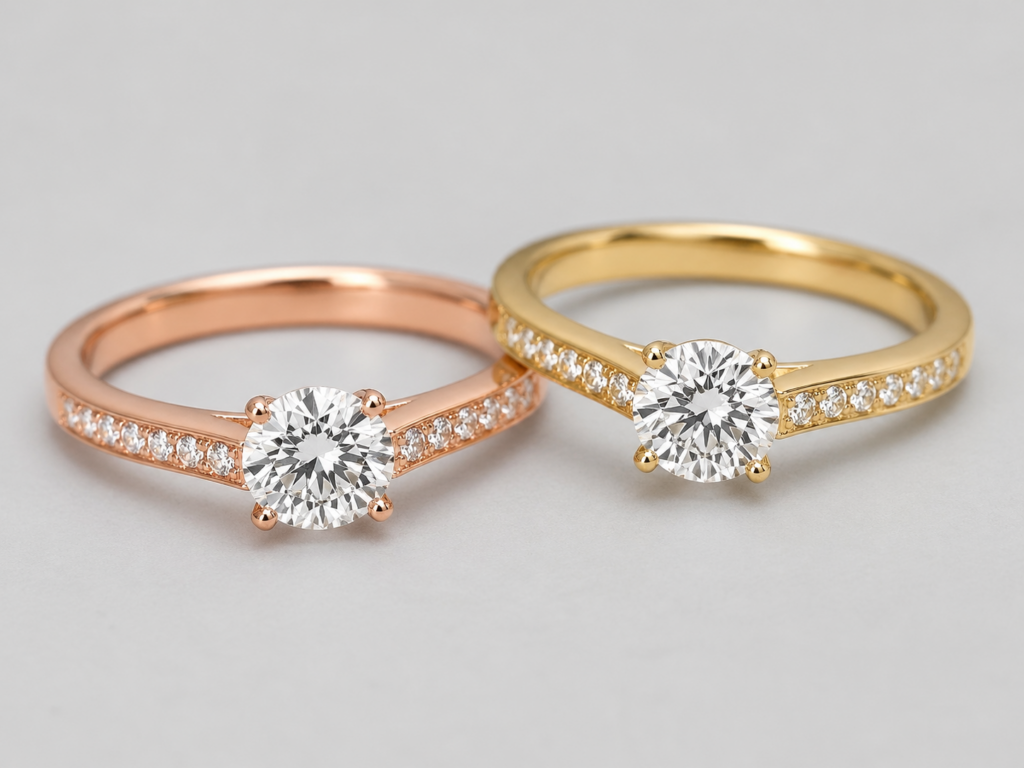
How to Choose between Rose Gold and Yellow Gold?
Choosing between rose gold and yellow gold comes down to what matters most to you. But here are a few things you must consider:
- Budget: Think about how much you’re comfortable spending. Then compare your budget with rose and yellow pieces that have similar karats and designs.
- Maintenance Tolerance: If you prefer something that’s easy to care for, then go for rose gold. Its higher copper content makes it more durable and tarnish-resistant unlike yellow gold that may react with silver sulfide.
- Skin Sensitivity: For people with sensitive skin, custom 14K gold jewelry and higher karat gold pieces are generally safe, since they contain more pure gold than alloys.
- Fashion Preference: You can either choose the timeless, classic look of yellow gold or the modern and slightly unique vibe of rose gold. Go with what feels right for you and don’t ask, is yellow gold worth anything or what is rose gold value?
Is White Gold More Expensive Than Yellow Gold?
No, white gold isn’t usually more expensive than yellow gold. Prices for both are similar because they’re based on gold purity, not the color. White gold jewelry just has a different blend of alloy metals and requires rhodium plating, but that still doesn’t cause significant variation in cost.
Conclusion
So, is rose gold more expensive than yellow gold? NO. Both metals have the same intrinsic value when their karats are identical. But the varying cost of their alloy metals often makes yellow gold more expensive. Beyond that, factors like design complexity, brand positioning, and finishing requirements can also influence their price.