Have you ever wondered what gold jewelry is best for you? The debate most times is between 14K vs 18K gold because they are the most common options.
But while both are popular, they are different in many ways. In this post, we will explain the various ways they differ and how you can choose the best one for you.
What Does “Karat” Mean in Gold Jewelry?
Before choosing gold jewelry, the first thing you need to know are the different karat gold options. Karat (K) is the universal symbol for measuring the purity of gold, indicating how much of the jewelry is pure gold as against the percentage of other metals.
For context, gold is a soft metal, so other metals are added to improve its strength and durability.
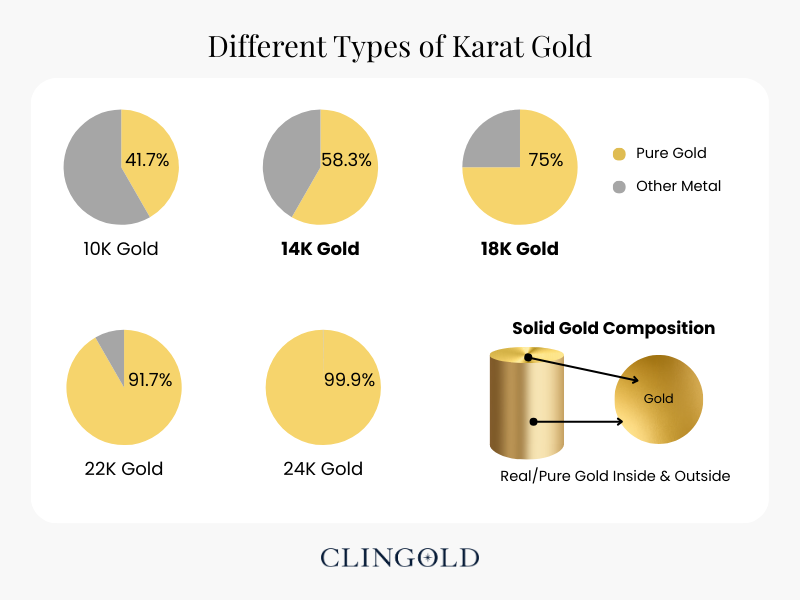
The karat system is based on 24 parts. For 14K gold, it means 14 parts are pure gold, which equals 58.3%. And for 18K gold, it means 18 parts are pure gold, which equals 75%.
What is 14K Gold?
14K gold is made of 58.3% pure gold and 41.7% alloyed metals (like copper, silver, zinc, nickel, or palladium). This mixture ensures durability while ensuring that the jewelry is attractive and affordable.
Is 14K Gold Good?
Yes, 14K gold is good. Its alloy composition makes it very resistant to scratches, dents, and bending that usually happen to higher-karat gold. And despite the amount of alloyed metals, it still maintains its classic gold look.
Does 14K Gold Tarnish?
14K gold can develop slight tarnish over time due to the high percentage of alloy metals. This becomes worse when it’s exposed to moisture, chemicals, sweat, or other damaging elements for a long time. However, with regular cleaning and proper storage, you can prevent early tarnishing.
What is 18K Gold?
18K gold is made up of 75% pure gold and 25% alloyed metals (like copper, silver, zinc, nickel, or palladium). It is valued for its deep gold color and luxurious look.
Is 18K Gold Good?
Yes, 18K gold is an excellent choice, particularly when considering things like elegance and higher gold purity. Its warm, vibrant tone gives it a more luxurious appearance, though it requires more careful handling because of its softness.
Does 18K Gold Tarnish?
18K gold is highly resistant to tarnishing because of its increased amount of gold content. But if the jewelry is exposed to harsh chemicals or extreme conditions for a long time, there will be minor discolorations.
Differences Between 14K and 18K Gold
The difference between 14K and 18K gold are notable in several aspects, such as their purity, color, durability, and price. Understanding these distinctions will help you make an informed decision.
| Feature | 14K Gold | 18K Gold |
| Purity (Gold Content) | 58.3% pure gold + 41.7% alloys | 75% pure gold + 25% alloys |
| Color | Lighter, slightly paler yellow (or cooler tone in white/rose) | Richer, deeper, more saturated gold color |
| Price | More affordable (≈ 58.3% of 24k gold price) | More expensive (≈ 75% of 24k gold price) |
| Durability | Harder, more scratch-resistant, better for daily wear | Softer, more prone to scratches and bending |
14K vs 18K Gold: Purity Differences
The main factor when comparing different types of gold jewelry is the percentage of pure gold in them. 14K contains 58.3% pure gold, while 18K contains 75% pure gold.
Because 18K has higher pure gold, it offers greater intrinsic value and looks more attractive. However, it is softer and more prone to scratches. 14K gold, on the other hand, is stronger and can handle daily wear & tear because of the high amount of alloy metals in it.
The purity level also answers the question: does gold tarnish? 18K is more resistant to tarnishing because it contains a higher proportion of real gold.
14K vs 18K Gold: Color Differences
The color difference between 14K and 18K gold are available in 3 types: yellow, white, and rose.
- Yellow Gold
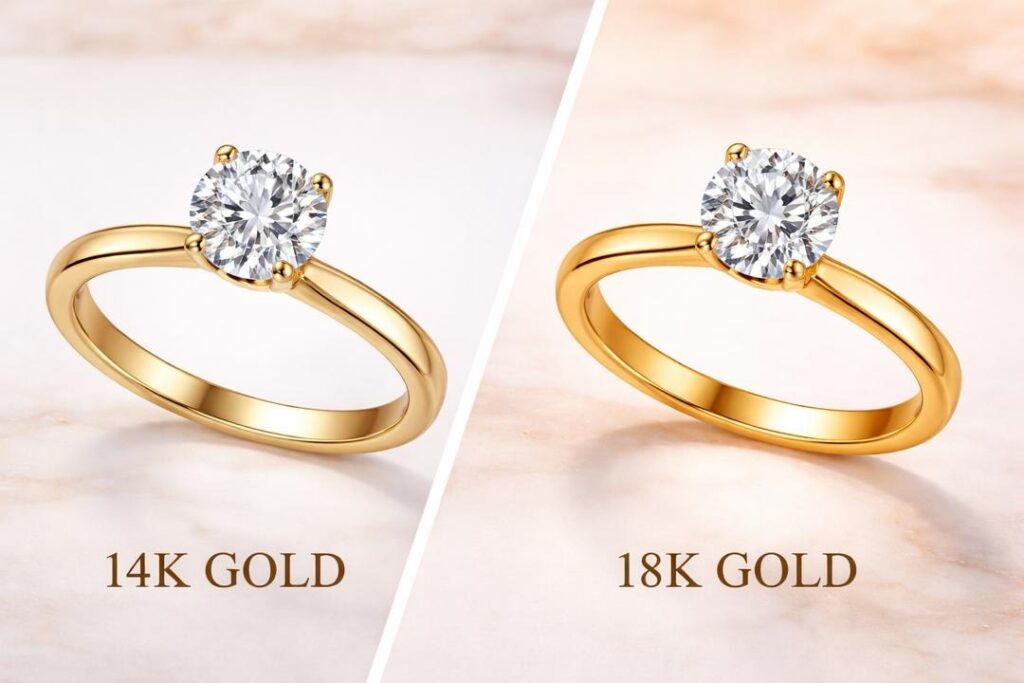
This is the most common color type. 18K yellow gold has a more vibrant golden hue thanks to the higher percentage of pure gold content, giving it a luxurious look that’s often associated with fine jewelry. In contrast, 14K yellow gold has a slightly lighter golden tone because of the higher proportion of alloy metals.
- White Gold
14K and 18K gold are sometimes coated with rhodium to achieve a bright, silvery finish. The effect is not very noticeable on 18K white gold jewelry though, because of its higher gold content. Reverse is the case for 14K white gold, which appears glaringly whiter due to its lower pure gold content.
- Rose Gold
The rose 14K vs 18K gold color difference comes from the amount of copper in the jewelry. 14K rose gold jewelry contains more copper, giving it a stronger, more vibrant reddish-pink tone. 18K rose gold, on the other hand, displays a subtle rose tone because of its lower copper percentage and higher gold content.
14K vs 18K Gold: Price Differences
The price difference between 14K and 18K gold is largely driven by their gold content. Since 18K contains 75% pure gold, it is significantly more expensive than 14K that contains 58.3% pure gold.
The prices fluctuate in response to the global gold market, but 14K is always the more budget-friendly option. You can check goldprice.org to know the actual price. As at the time of writing this blog (2026/4/7), it was approximately $4,769/oz, meaning:
- 14K Gold Price: 58.3% x $4,769 = $2,780
- 18K Gold Price: 75% x $4,769 = $3,577
14K vs 18K Gold: Durability Differences
Wondering—is 14K gold more durable than 18K? The answer is YES.
In any 14K vs 18K gold durability comparison, the latter usually loses because it contains higher gold content, which makes it softer and more susceptible to wear over time.
Is 18K Gold Better Than 14K?
Yes, if what you are considering is the percentage of gold content, intrinsic value, and visual appeal.
However, “better” is subjective. Choosing between the two gold variants depends on your priorities. For example, if what you want is a gold piece that is affordable, will last long, and can be worn daily, 14K is the better option.
How to Choose Between 14K and 18K Gold?
Suggestions for Individual Buyer
For buyers, the decision between 14K vs 18K gold should be influenced by personal desires.
- If you need practical gold jewelry that you can wear all day, especially if you lead an active life, 14K gold is the best for you whether for engagement rings, wedding bands, or everyday jewelry. You can trust its durability, scratch-resistance, and strength.
- If your focus is on visual richness and a more luxurious feel, 18K gold will better suit you. It has a deeper, warmer gold tone that makes it ideal for statement pieces, heirloom jewelry, and special occasion wear.
Suggestions for Jewelry Brand
For jewelry brands, the choice of which is better between 14K vs 18K gold should be guided by your market positioning, target customer profile, and pricing.
- 14K gold is often the better choice for brands that sell a lot of jewelry and want to offer something not too expensive.
- 18K gold aligns strongly with brands that are focused on offering high-end jewelry. These jewelry have higher gold purity and luxury appeal, which are key selling points.
Some jewelry brands however, offer both 14K and 18K gold. This way, they can sell to all kinds of customers without changing what their brand is about.
Conclusion
Is 18K gold better than 14K? The ultimate answer comes down to you. If you need an affordable yet durable option, 14K gold is a reliable choice. But if you are drawn to gold with higher purity and luxury appeal, 18K gold is better.
Now that you know the differences, you wouldn’t want any mistake. We are a professional gold jewelry manufacturer, with years of experience in crafting exquisite 14K and 18K that suits your needs. Ready to add some sparkle to your life or brand? Contact us today!
FAQs
Yes, you can wear 14K and 18K gold in the shower. However, frequent contact with water, soap, and shampoos can dull the shine.
Both 14K and 18K gold are hypoallergenic, but 18K is better in this regard because it contains a higher proportion of pure gold.
Both of them are technically waterproof as they don’t get damaged by water itself, but abrasive components in water like salt and chlorine can damage them.
No, it is very resistant to scratches thanks to its stronger alloy composition.
14K gold and 18K gold are both good for an engagement ring because of their durability and capability to withstand dents from everyday wear.